Why a disruption on one international route can affect cargo delivery times and costs in Kazakhstan
International logistics depends on numerous transport hubs and routes. When one of the key routes faces restrictions, the consequences can be felt far beyond the region — affecting delivery routes, transit times and transportation costs.
When One Route Affects the Entire Market
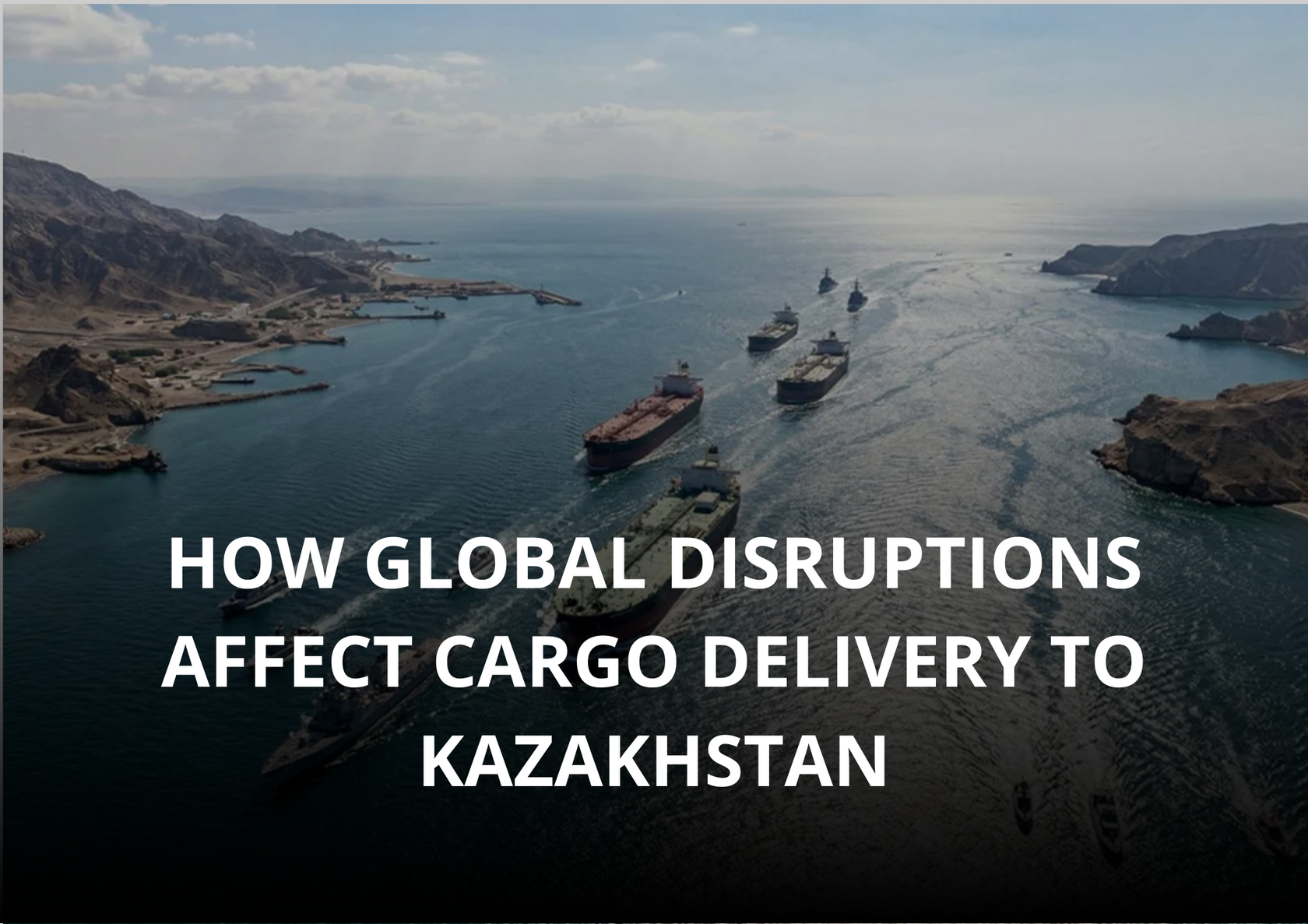
A clear example is the situation around the Strait of Hormuz. In September 2026, vessel traffic through the strait dropped significantly. According to Reuters, only 4 vessels passed through the strait on September 15, compared with an average of 18 vessels per day during the previous 10 days.
For carriers, such changes mean finding alternative solutions. Cargo flows are redistributed, pressure increases on other routes, and transit times and operating costs may change as a result.
How Does This Affect Kazakhstan?
Kazakhstan is an important link between the markets of Asia and Europe, so changes in international cargo flows can also affect regional transportation routes.
One example is the development of the Middle Corridor. During the first eight months of 2026, 419 container trains from China passed through the route — 84% more than during the same period in 2025. Container transit reached 44.2 thousand TEU.
The growth of such routes shows that when traditional logistics routes become less predictable, businesses increasingly turn to alternative transport corridors.
What Happens to a Specific Shipment?
For a customer, the impact becomes visible when the original route has to be changed. A different transit point, additional handling or a combination of several transport modes may be required.
As a result, not only transit times can change. Transportation costs may increase, additional terminal charges may appear, or the departure date may be postponed.
At the same time, a longer route does not necessarily mean a longer delivery time. If the main route is congested, an alternative route may actually be faster.
Why Is It Important to Have an Alternative?
International transportation can no longer be evaluated based only on distance and price. When choosing a route, businesses should also consider transport availability, terminal capacity, transit requirements and potential changes along the route.
This is particularly important for equipment and spare parts, where a delayed shipment can affect a company's operations.
NOMADTRANZIT: Logistics That Adapts to Change
NOMADTRANZIT arranges international transportation to Kazakhstan and helps select routes based on cargo type, required transit time, cost and current conditions on the transportation market.
When the original logistics plan changes, we consider alternative transportation options and find a solution that helps minimize the impact on delivery time and costs.
Global logistics is constantly changing. Your cargo route should be ready to change with it.
International logistics depends on numerous transport hubs and routes. When one of the key routes faces restrictions, the consequences can be felt far beyond the region — affecting delivery routes, transit times and transportation costs.
When One Route Affects the Entire Market
A clear example is the situation around the Strait of Hormuz. In September 2026, vessel traffic through the strait dropped significantly. According to Reuters, only 4 vessels passed through the strait on September 15, compared with an average of 18 vessels per day during the previous 10 days.
For carriers, such changes mean finding alternative solutions. Cargo flows are redistributed, pressure increases on other routes, and transit times and operating costs may change as a result.
How Does This Affect Kazakhstan?
Kazakhstan is an important link between the markets of Asia and Europe, so changes in international cargo flows can also affect regional transportation routes.
One example is the development of the Middle Corridor. During the first eight months of 2026, 419 container trains from China passed through the route — 84% more than during the same period in 2025. Container transit reached 44.2 thousand TEU.
The growth of such routes shows that when traditional logistics routes become less predictable, businesses increasingly turn to alternative transport corridors.
What Happens to a Specific Shipment?
For a customer, the impact becomes visible when the original route has to be changed. A different transit point, additional handling or a combination of several transport modes may be required.
As a result, not only transit times can change. Transportation costs may increase, additional terminal charges may appear, or the departure date may be postponed.
At the same time, a longer route does not necessarily mean a longer delivery time. If the main route is congested, an alternative route may actually be faster.
Why Is It Important to Have an Alternative?
International transportation can no longer be evaluated based only on distance and price. When choosing a route, businesses should also consider transport availability, terminal capacity, transit requirements and potential changes along the route.
This is particularly important for equipment and spare parts, where a delayed shipment can affect a company's operations.
NOMADTRANZIT: Logistics That Adapts to Change
NOMADTRANZIT arranges international transportation to Kazakhstan and helps select routes based on cargo type, required transit time, cost and current conditions on the transportation market.
When the original logistics plan changes, we consider alternative transportation options and find a solution that helps minimize the impact on delivery time and costs.
Global logistics is constantly changing. Your cargo route should be ready to change with it.